

A customer sent a job over looking for an explanation:
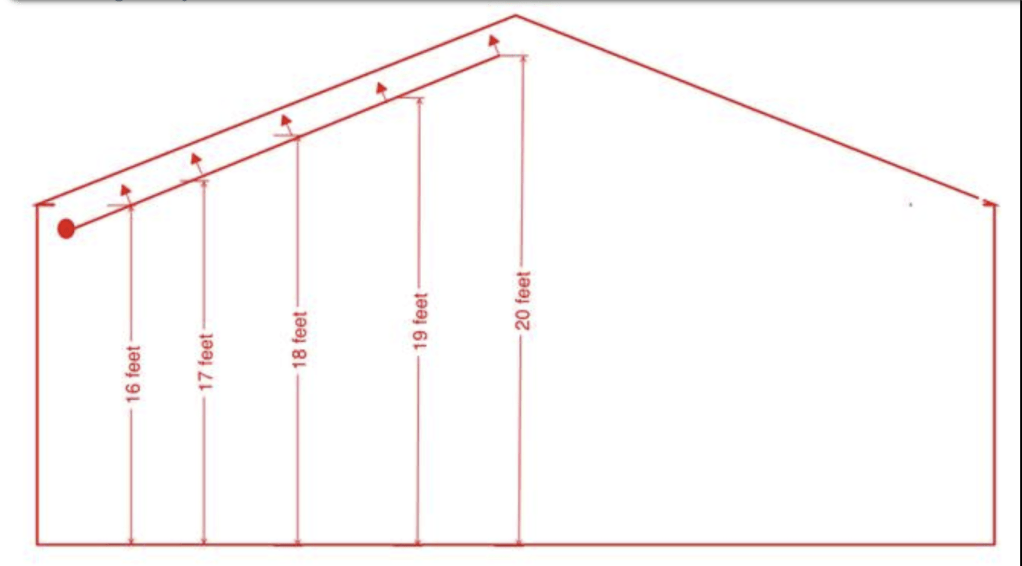
“I have an inquiry about HydraCALC. I’m trying to calculate a system with sloping branch-lines as shown in below figure. I made two calculations in which everything is the same except for the elevation.
First, all heads have same elevation of 20 feet. And second, each are provided exact elevation as shown below. My questions are the following:
- Why is the result not the same if the highest head or elevation to overcome is equal for the two situations?
- Why is the system with sloping branch-line more demanding if the only difference in inputs are the elevations?”
The answer lies in the very question.
This is the system:
These are the results:
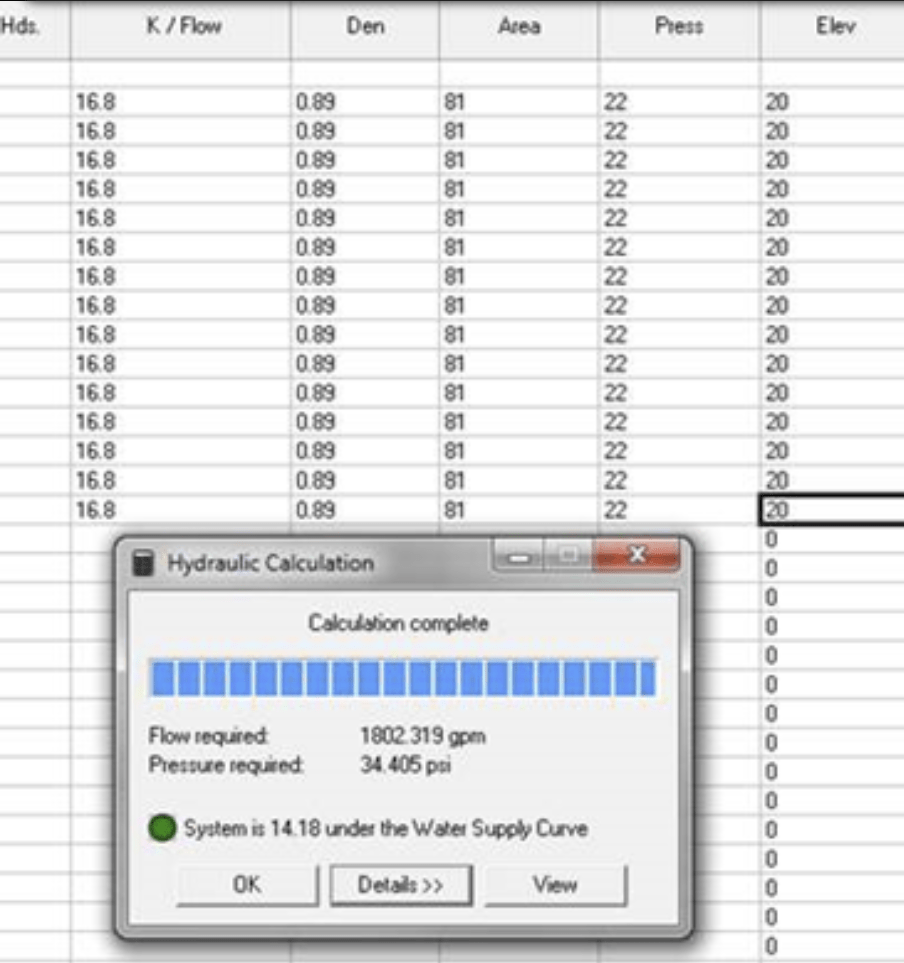
All elevations entered as 20′:
All elevations entered as actual:
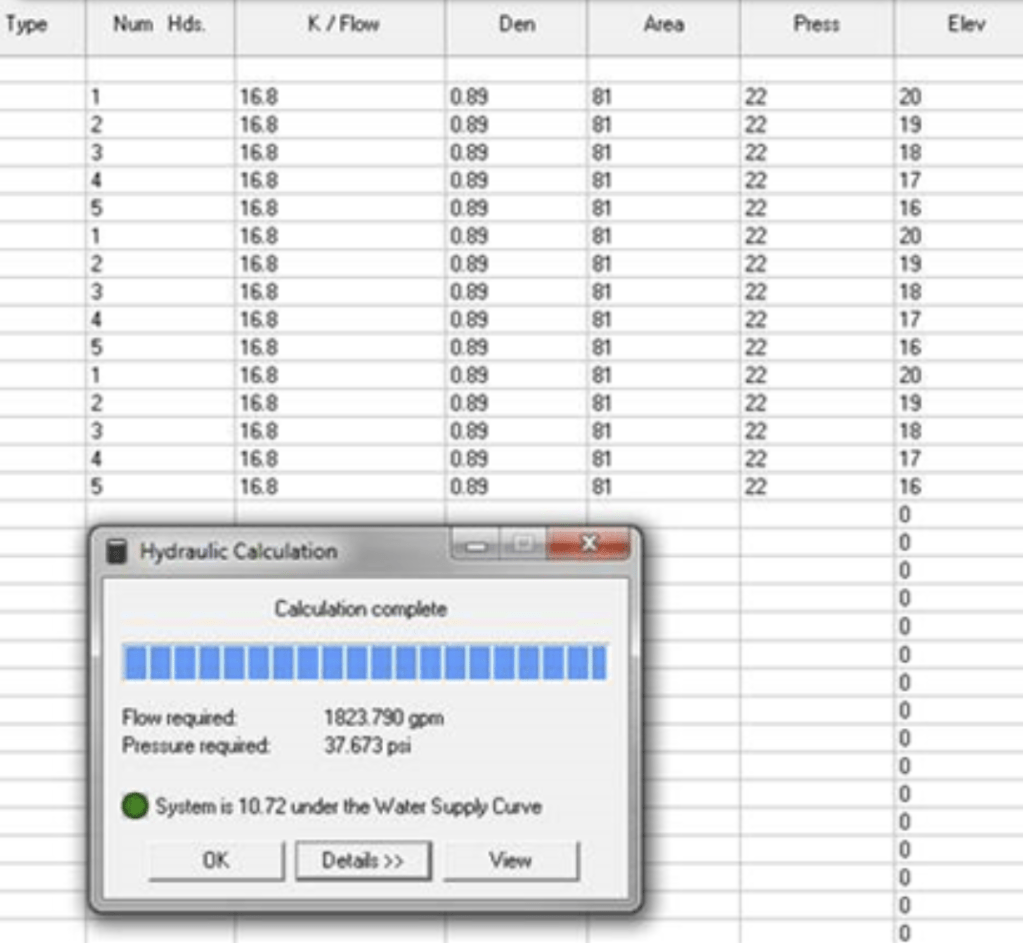
Each system is getting enough pressure to supply water to 20’ of elevation for every head. In the case where all heads are labelled as 20’, this results in less flow and pressure as the system is more evenly ‘balanced’ from head to head.
In the system where the elevations vary, there is more ‘overage’ due to that fact that every head is getting 20’ of elevation pressure because the water has to be able to make it up to the highest head. This means even the 16’ and 17’ heads are getting 20’ worth of pressure. This is why NFPA 13 added the rule a while back requiring that the actual elevation at each head be entered – because it makes a negative impact on the calculation.
A side note: Back when this rule was implemented (Late 80s? Early 90s?), a good customer called me because he recalculated his sloping system using the new rules and it didn’t work. My answer was – “That is why they added the rule!”


Leave a Reply